Affiliate Disclosure: This transparent investigative report embeds contextual affiliate links pointing to the official manufacturer’s portal. If you purchase through these links, we may receive a referral commission at no additional cost to you, which helps sustain our research.
Technical Disclaimer: The information provided regarding the Water Freedom System is for educational purposes. Performance results depend on local environmental conditions (specifically humidity levels) and proper assembly. Always prioritize local health and safety regulations regarding water consumption and storage.
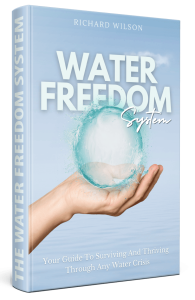
In an era where infrastructure stability is increasingly uncertain, the ability to secure a private, reliable source of clean water is no longer just a prepper’s dream—it has become a practical priority for many households. Traditional water sources are vulnerable to contamination, service outages, and rising costs. The Water Freedom System has emerged as a widely discussed breakthrough, promising to empower individuals by leveraging atmospheric water generation—a technology that extracts pure water directly from the air.
Unlike massive industrial desalination plants or complex rain-harvesting setups that require significant space and permits, the Water Freedom System focuses on accessibility. It is designed to be a compact, replicable solution that can be built by virtually anyone, regardless of technical background. This review investigates the core mechanics of this system and whether it offers a viable path to self-reliance in 2026.
Understanding Atmospheric Water Generation (AWG)
At its heart, the Water Freedom System utilizes the principles of condensation. You have likely witnessed this phenomenon yourself: a cold glass of water on a hot day "sweats" as moisture from the air collects on the surface. AWG technology scales this process up. By creating a controlled environment where air is cooled below its dew point, the system collects the resulting liquid water, filters it, and makes it available for household use.
The beauty of this approach is that it is location-independent. While traditional wells rely on groundwater levels and rain barrels rely on weather patterns, atmospheric water is available almost everywhere—even in arid climates, humidity exists in the air. The Water Freedom System provides the blueprints to construct a device capable of tapping into this infinite reservoir, effectively turning the air into your own private well.
Why Consider This System?
No longer dependent on municipal lines, utility companies, or public grid integrity.
Once constructed, the primary operational expense is minimal compared to the long-term cost of bottled or utility water.
The system fits in small footprints, making it suitable for apartments, homes, or remote off-grid locations.
Provides a critical safety net during natural disasters, supply chain breaks, or utility service interruptions.
Practical Implementation
The Water Freedom System is designed with the average homeowner in mind. The provided documentation aims to simplify complex physics into a series of achievable, step-by-step DIY tasks. This makes it an attractive project for those looking to improve their homestead's resilience without needing an engineering degree.
By following the blueprints, you are building a device that is rugged, sustainable, and easily maintained. Because you are the one who constructs it, you also understand exactly how it works, how to repair it, and how to optimize it for your specific geographic location. This is not just a consumer product; it is a transfer of knowledge that empowers you to control a fundamental resource.
Final Considerations
Securing a sustainable future requires foresight. Whether you are driven by the goal of off-grid living, preparedness for emergencies, or simply reducing your environmental footprint, the Water Freedom System offers an intriguing, high-tech DIY approach to one of life's most essential needs.
If you have been looking for a way to break free from the reliance on public utilities and ensure your family has consistent access to clean water, this system provides the map you need to get started. Given the ease of assembly and the long-term benefits of self-reliance, it represents one of the most practical investments in household stability for 2026.
No comments:
Post a Comment