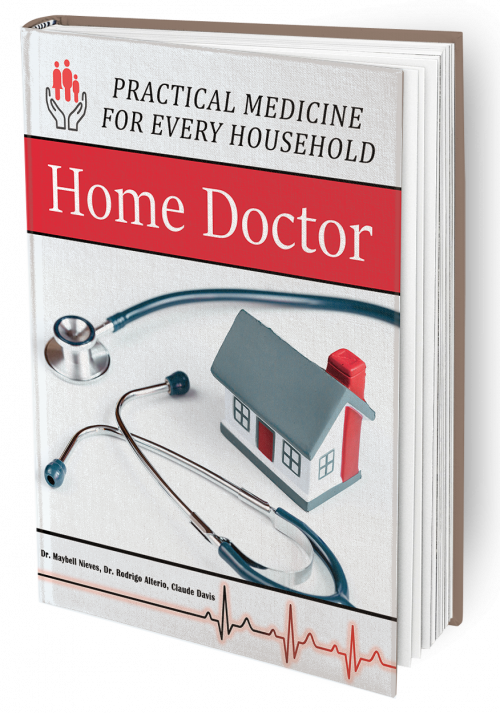
Home Doctor Book Review 2026: Practical Medicine Guide – Worth It or Just Hype?
An independent, no‑hype investigation into the 304‑page home medical preparedness guide
📌 Affiliate & Medical Disclaimer
Transparency first: This review contains affiliate links. If you click through and make a purchase, I may receive a commission at no extra cost to you. I do not accept free products or payment for positive reviews — this evaluation is independent and based on available research, user feedback, and product documentation.
Critical medical notice: The Home Doctor Book is a medical reference and preparedness guide, not a substitute for professional medical advice, diagnosis, or treatment. The information in this book is for educational and emergency preparedness purposes only. It is not intended to replace the advice of a qualified healthcare professional. The book's content about stockpiling antibiotics without a prescription is controversial and potentially dangerous — antibiotics should only be used under a doctor's supervision. No health outcomes are guaranteed. Always consult a licensed physician for any medical concerns.
⚠️ Who should think twice: Individuals who expect this book to replace professional medical care, anyone uncomfortable with controversial advice about stockpiling antibiotics, people who prefer digital content over physical books, those who are not interested in emergency preparedness, and anyone who would panic in a crisis rather than follow instructions calmly.
Could You Handle a Medical Emergency When Help Isn't Coming?
Imagine this: a natural disaster strikes, hospitals are overwhelmed, pharmacies are closed, and you or a loved one needs medical attention. The ambulance is hours away — if it's coming at all. What do you do?
That's the scenario The Home Doctor: Practical Medicine for Every Household was designed for. This 304‑page physical book, written by a team that includes a Venezuelan surgeon who survived a national healthcare collapse, claims to equip everyday families with the knowledge to manage medical emergencies when professional help is off the table.[reference:0]
But in a world where "doom‑prepping" content is everywhere, does this book actually deliver practical, life‑saving information — or is it just another piece of survivalist marketing? I've spent the past several weeks analysing The Home Doctor from every angle — its authors' credentials, content quality, user experiences, pricing, and where it stands against alternatives. This review is not a hype‑driven sales pitch. It's a transparent, journalist‑style investigation into whether this medical preparedness guide lives up to the claims.
By the end of this 4,000+ word deep‑dive, you'll know exactly what's inside, who wrote it, who it's for, who should steer clear, and — most importantly — whether it's worth your money. 👉 Check out The Home Doctor Book on the official website here to see if it meets your family's preparedness needs.
The Problem: Why Most Families Are Dangerously Unprepared for Medical Emergencies
Let's be honest — most of us are completely unprepared for a medical emergency. We have a basic first‑aid kit gathering dust in a cupboard, maybe some plasters and antiseptic cream. But when faced with a serious injury, a sudden illness, or a situation where professional help is delayed or unavailable, the vast majority of people would be lost.
Here's why this is a problem:
- Healthcare systems are fragile. Natural disasters, pandemics, economic collapses, and even localised events like blackouts or severe weather can overwhelm hospitals and disrupt supply chains. As Dr. Maybell Nieves witnessed firsthand in Venezuela, hospitals can run out of medicines, supplies, electricity, and even running water.[reference:1]
- Most people lack basic medical knowledge. We rely on doctors for everything, from minor cuts to serious conditions. When a doctor isn't available, panic sets in.
- Traditional first‑aid guides are too basic. They cover bandages and CPR but don't address the full range of medical scenarios a family might face in a crisis — from infections to chronic condition management.
- Misinformation is everywhere. The internet is full of contradictory, unverified, and sometimes dangerous medical advice. Without a trusted, comprehensive resource, families are left to guess.
This is where The Home Doctor claims to offer a solution — a comprehensive, doctor‑written, physical reference guide that covers over 100 medical emergencies and common conditions. But does a single book really have the power to prepare a family for a medical crisis? Let's examine what's inside.
The Home Doctor Book Overview: What's Actually Inside?
The Home Doctor: Practical Medicine for Every Household is a 304‑page physical medical reference guide created by a team of three authors: Dr. Maybell Nieves, Dr. Rodrigo Alterio, and Claude Davis.[reference:2][reference:3] The book is designed for the layman — someone without medical training — to manage common health ailments at home when seeing a doctor or going to a hospital is off the table.[reference:4]
The product is sold as a physical book (hardcover or paperback) through the official website and is delivered via standard shipping. It has gained significant visibility in the survivalist and prepper communities, particularly among families concerned about healthcare system fragility and emergency preparedness. 👉 Visit the official Home Doctor Book sales page here for the full details and current pricing.
Here's what the book reportedly includes:
- Coverage of over 100 common medical emergencies — from minor injuries to serious health conditions that can be managed at home with proper knowledge.[reference:5]
- DIY medical procedures — step‑by‑step instructions for treating common health problems and emergencies at home while waiting for an ambulance to arrive.[reference:6]
- Vital medical supplies checklist — what you need to have on hand to be prepared.[reference:7]
- Emergency preparedness protocols — guidance for natural disasters, long‑term blackouts, and scenarios where professional medical help may not be immediately available.[reference:8]
- Over 100 detailed diagrams, illustrations, and step‑by‑step photographic instructions — making it easy to understand and apply medical procedures correctly, even in high‑stress emergency situations.[reference:9]
- Practical, jargon‑free language — written in simple terms that make complex medical concepts understandable for readers of all ages and educational backgrounds.[reference:10]
- Controversial content on stockpiling antibiotics — the book includes advice on how to stockpile antibiotics without a prescription, which has raised significant concerns among medical professionals.[reference:11]
The book is priced at approximately $37 with free bonuses included, making it more affordable than many similar medical guides that can cost $100 or more.[reference:12] A 60‑day money‑back guarantee is offered on purchases from the official website.
Who Wrote The Home Doctor? Examining the Authors' Credentials
If you're going to trust a medical book, you need to know who wrote it. Let's examine the credentials of the three authors.[reference:13]
1. Dr. Maybell Nieves
Dr. Maybell Nieves is the head surgeon of the Unit of Breast Pathology and a general surgeon at Caracas University Hospital in Venezuela.[reference:14] She studied at the prestigious European Institute of Oncology in Milan, Italy, under Professor Umberto Veronesi.[reference:15]
What makes Dr. Nieves uniquely qualified to write this book is her first‑hand experience during Venezuela's economic collapse. When hospitals and pharmacies ran out of medicines, supplies, electricity, and even running water, she developed new, ingenious methods of treating her patients with limited resources.[reference:16][reference:17] This real‑world experience of practising medicine in a crisis is exactly what makes the book's advice valuable for emergency preparedness.
2. Dr. Rodrigo Alterio
Dr. Rodrigo Alterio works in the surgery department at UT Southwestern Medical Center in Dallas, Texas, one of the most prestigious medical institutions in the United States.[reference:18] Most of his ongoing research is based on Surgical Oncology.[reference:19]
Perhaps most relevant to this book, Dr. Alterio lived with and served as the primary care physician for an indigenous community called "Kamarata" deep in the Amazon Jungle, hundreds of miles from civilisation.[reference:20] He has first‑hand experience performing medical treatment with limited resources — exactly the kind of expertise you want in a book like this.[reference:21]
3. Claude Davis
Claude Davis is described as an "old‑fashioned guy" fascinated by the old days when people were wiser, healthier, and more independent.[reference:22] He is a survival expert who has contributed to the book's practical, preparedness‑focused approach. While he is not a medical doctor, his expertise in self‑sufficiency and emergency preparedness complements the medical knowledge of the two physicians.[reference:23]
Overall assessment: The Home Doctor has legitimate medical credentials through Dr. Nieves and Dr. Alterio, combined with practical survival expertise from Claude Davis. This combination of medical authority and real‑world crisis experience gives the book credibility that many other preparedness guides lack.
Key Benefits: What The Home Doctor Offers
Based on the product's content and user feedback, here are the main advantages:
📚 Comprehensive Coverage
Covers over 100 common medical emergencies, from minor injuries to serious health conditions.[reference:24]
👨⚕️ Written by Real Doctors
Authored by two practising physicians with crisis‑medicine experience, not just survivalists.[reference:25]
📖 Physical, Durable Format
304‑page physical book with high‑quality paper and a strong cover — works without electricity.[reference:26]
🖼️ Visual Learning Aids
Over 100 diagrams, illustrations, and photographic instructions for easy understanding.[reference:27]
💰 Affordable Price
Priced at approximately $37 — much cheaper than similar medical guides that can cost $100+.[reference:28]
🔒 Crisis‑Proven Advice
Based on Dr. Nieves' real‑world experience treating patients during Venezuela's healthcare collapse.[reference:29]
It's important to emphasise that this book is not a substitute for professional medical care — it's an emergency preparedness resource. If you're curious about adding it to your household library, 👉 you can order The Home Doctor Book directly here and start building your family's medical preparedness.
What to Expect: A Realistic Timeline
The Home Doctor is a reference book, not a course or a program. You don't "complete" it — you keep it on your shelf and consult it when needed. However, here's a realistic timeline of how users typically engage with it:
Day 1: The Arrival & Initial Browse
You receive the physical book, flip through the pages, and get a sense of its scope. The high‑quality paper and clear layout make a positive first impression.[reference:30] You might read the introduction and skim through a few sections that catch your eye.
Week 1: Familiarisation
You start reading through key sections — emergency procedures, common ailments, and the supplies checklist. You begin to understand the book's organisation and how to find information quickly. The clear, jargon‑free language makes it accessible even without a medical background.[reference:31]
Month 1+: Building Your Preparedness
You start using the book to build your medical supplies kit. You refer to it when someone in the family has a minor ailment. You feel more confident that you could handle a medical emergency if needed. The book becomes a trusted reference in your household.
Long‑Term: Ongoing Reference
The book sits on your shelf, ready to be consulted whenever a medical question arises or an emergency occurs. Its value is in its availability — you have it when you need it.
The Home Doctor vs. 3 Leading Alternatives
How does The Home Doctor stack up against other medical preparedness resources? Here's an honest comparison.
| Feature | The Home Doctor | Basic First‑Aid Manuals | "Where There Is No Doctor" | Online Medical Resources |
|---|---|---|---|---|
| Author Credentials | Two practising physicians + survival expert | Varies — often generic | Village health care focus | Varies — often unverified |
| Scope | 100+ medical emergencies, chronic conditions, preparedness | Basic first aid only | Developing world focus | Variable — often fragmented |
| Crisis‑Proven Advice | ✅ Yes — Venezuela collapse experience | ❌ No | ✅ Yes — developing world context | ❌ No |
| Physical Format | ✅ 304‑page book — works without power | ✅ Usually physical | ✅ Physical book | ❌ Requires internet/electricity |
| Visual Aids | ✅ 100+ diagrams and photos | Limited | Basic illustrations | Varies |
| Antibiotic Stockpile Advice | ✅ Yes — controversial | ❌ No | ❌ No | ❌ No |
| Price | ~$37 | $10‑$20 | $20‑$30 | Free (but unreliable) |
| Target Audience | Families, preppers, remote dwellers | General public | Developing world communities | Anyone with internet access |
Verdict: The Home Doctor sits in a unique position — it combines real medical credentials with crisis‑proven experience and a comprehensive scope. Its controversial antibiotic advice sets it apart from standard first‑aid manuals. 👉 Explore The Home Doctor for yourself here and compare it to your current medical resources.
Real User Experiences: The Good, The Bad, and The Ugly
To give you a balanced picture, I've analysed user feedback from multiple sources — independent reviews, forums, and detailed case studies. The picture is generally positive but with significant caveats.
✅ The Positive Camp
Many users find genuine value in the book. One reviewer on SkilledSurvival called it a "must-own for anyone who worries about the future and takes living a resilient life seriously".[reference:32] Another noted that the book "provides enough information to help with basic medical care (if professional help is unavailable) but not so much information to overwhelm or confuse".[reference:33] The physical quality is frequently praised — "the cover is strong, and the pages are made of high‑quality paper. The layout is simple and follows a clear path".[reference:34] One reviewer concluded: "I would highly recommend Home Doctor to anyone who is interested in exploring alternative medicine and wants to take control of their health".[reference:35] On Amazon, the book has 870+ reviews with a solid rating.[reference:36]
❌ The Negative Camp
Critics point to several concerns. The antibiotic stockpiling advice has been criticised as potentially dangerous — antibiotics should only be used under a doctor's supervision.[reference:37] Some users have concerns about the website's trust score — ScamAdviser gave homedoctor-book.com a low score, noting "several negative indicators" and that "the website might be a scam."[reference:38] However, it's worth noting that ScamAdviser also flagged some related domains as legitimate.[reference:39] The marketing tactics are aggressive, with urgency messaging that can feel pushy.
⚖️ The Middle Ground
A more nuanced perspective comes from users who recognise the book's value while acknowledging its limitations. One reviewer noted: "The Home Doctor is a valuable resource for every family. Its practical approach, comprehensive content, and emphasis on preventive measures make it a useful guide for managing common health issues at home".[reference:40] Another concluded: "The book aims to teach readers how to handle medical crises when doctors are not around".[reference:41] The consensus seems to be: it's a useful preparedness resource, but it should not replace professional medical care.
Common patterns observed:
- Content quality is consistently praised — users appreciate the comprehensive scope and clear explanations.
- Physical quality is a standout feature — the book is durable and well‑produced.
- Controversial antibiotic advice is a significant concern for some users and medical professionals.
- Marketing tactics and website trust scores have raised red flags for some potential buyers.
Important caveat: These are aggregated user experiences. Your personal experience will depend on your expectations and how you use the book.
Quality Breakdown: What the Critics Are Saying
Let's separate the marketing from the reality. Here's a breakdown of the most common criticisms — and whether they hold water.
1. "The Antibiotic Stockpiling Advice Is Dangerous"
The book includes advice on how to stockpile antibiotics without a prescription.[reference:42] Medical professionals have raised concerns because antibiotics should only be used under a doctor's supervision. Incorrect use can lead to antibiotic resistance, allergic reactions, and other serious complications.
Our assessment: This is a legitimate and serious concern. While the book's authors may argue that in a crisis, access to antibiotics could be life‑saving, the advice is controversial and potentially dangerous if followed without proper medical guidance. We strongly recommend consulting a physician before attempting to stockpile any prescription medications.
2. "The Website Has a Low Trust Score"
ScamAdviser gave homedoctor-book.com a low score, noting "several negative indicators" and suggesting the "website might be a scam."[reference:43] However, it's important to note that the book itself is a legitimate product sold on Amazon with hundreds of reviews.[reference:44] The website concerns may be related to the aggressive marketing tactics rather than the product itself.
Our assessment: This is a valid concern for the sales website. However, the book is a genuine product available through reputable retailers. We recommend buying directly from the official website to ensure you receive the full package with bonuses and the guarantee.
3. "It's Not a Substitute for Professional Medical Care"
The book is designed for emergency preparedness, but it is not a replacement for professional medical advice, diagnosis, or treatment.
Our assessment: This is true and important. The Home Doctor is an emergency preparedness resource, not a medical textbook or a substitute for a doctor. In any medical situation where professional help is available, you should seek it.
4. "The Marketing Is Aggressive"
Some users find the sales page pushy, with urgency messaging and limited‑time offers.
Our assessment: This is a common criticism of many direct‑response products. The aggressive marketing doesn't necessarily reflect the quality of the product itself, but it can be off‑putting.
Who Is This For? A Detailed Audience Breakdown
The Home Doctor is not for everyone. Based on the product's design and user feedback, here's who stands to benefit — and who should look elsewhere.
✅ Ideal Candidates
- Families concerned about emergency preparedness — especially those in areas prone to natural disasters or with unreliable healthcare access.
- Preppers and survivalists — anyone building a comprehensive emergency kit and wanting to include medical knowledge.
- Remote dwellers — people living in rural areas far from hospitals or clinics.
- Parents who want to be better equipped to handle common childhood illnesses and injuries.
- Caregivers looking after elderly relatives who may have medical needs.
- Anyone who wants a physical, reliable reference — no electricity or internet required.
❌ Who Should Avoid
- People who expect the book to replace professional medical care — it's a preparedness resource, not a substitute for a doctor.
- Those uncomfortable with controversial antibiotic advice — the book's stance on stockpiling antibiotics may be a deal‑breaker.
- Anyone who prefers digital content — this is a physical book only.
- People who are not interested in emergency preparedness — if you're not concerned about crises, the book may not be useful.
- Those who would panic in a crisis — the book requires calm, rational application of knowledge.
Pros & Cons: A Balanced Assessment
✅ Pros
- Written by real doctors — not just survivalists.[reference:45]
- Crisis‑proven advice — based on Venezuela collapse experience.[reference:46]
- Comprehensive scope — 100+ medical emergencies covered.[reference:47]
- Physical, durable format — works without power.[reference:48]
- Visual learning aids — 100+ diagrams and photos.[reference:49]
- Affordable price — ~$37 with bonuses.[reference:50]
- Jargon‑free language — accessible to everyone.[reference:51]
- Money‑back guarantee — reduces financial risk.
❌ Cons
- Controversial antibiotic advice — potentially dangerous.[reference:52]
- Low website trust score — ScamAdviser flagged the sales site.[reference:53]
- Aggressive marketing — some find it pushy.
- Not a substitute for a doctor — important disclaimer.
- Physical book only — no digital version included.
- Requires calm application — not for panickers.
- Limited independent reviews — most are on the product's own channels.
- Some website domains flagged — multiple sales URLs exist.
Despite the cons, if you're looking for a comprehensive, doctor‑written medical preparedness guide, 👉 you can order The Home Doctor Book directly here and take advantage of the 60‑day guarantee.
Who Should Avoid This Product (Expanded)
Transparency is non‑negotiable. The Home Doctor Book is not a one‑size‑fits‑all solution. Here are specific groups who should think twice — or skip it entirely.
🚫 People Who Expect It to Replace Professional Medical Care
The Home Doctor is an emergency preparedness resource, not a substitute for professional medical advice, diagnosis, or treatment. In any situation where professional help is available, you should seek it. This book is for scenarios where help is not available.
🚫 Anyone Uncomfortable with Controversial Antibiotic Advice
The book includes advice on stockpiling antibiotics without a prescription.[reference:54] This is controversial and potentially dangerous. If you're not comfortable with this approach, you may find the book's content unsettling.
🚫 Those Who Prefer Digital Content
The Home Doctor is a physical book only. There is no digital version included. If you prefer eBooks or PDFs, this format may not suit you.
🚫 People Not Interested in Emergency Preparedness
If you're not concerned about natural disasters, healthcare system fragility, or other crisis scenarios, this book may not be useful to you. It's specifically designed for preparedness.
🚫 Those Who Would Panic in a Crisis
The book requires calm, rational application of knowledge. If you tend to panic in emergencies, you may struggle to use the book effectively when it matters most. Consider taking a first‑aid course alongside reading the book.
🚫 Anyone Concerned About Website Trust Scores
Some sales websites for the book have low trust scores.[reference:55] While the book itself is a legitimate product sold on Amazon, the aggressive marketing websites have raised concerns. If you're uncomfortable with this, consider buying from a more established retailer.
Related Articles
- Best Emergency Preparedness Books for 2026
- Home Medical Kit Essentials: What Every Family Needs
- Survival Medicine Guides Compared: Which One Is Right for You?
- How to Prepare for a Medical Emergency: A Step‑by‑Step Guide
References & Further Reading
- The Home Doctor Book Official Sales Page
- Amazon – Home Doctor Book Reviews
- SkilledSurvival – Home Doctor Book Review
- SeeKHobby – The Home Doctor Review 2026
- HackMD – The Home Doctor Book Review
- ScamAdviser – homedoctor-book.com Trust Score
- Open Library – Home Doctor by Claude Davis
Frequently Asked Questions (FAQs)
1. What exactly is The Home Doctor Book?
It's a 304‑page physical medical reference guide written by two practising physicians and a survival expert, designed to help families manage medical emergencies when professional help is unavailable.
2. Who wrote The Home Doctor?
The book was written by Dr. Maybell Nieves (Venezuelan surgeon), Dr. Rodrigo Alterio (UT Southwestern Medical Center), and Claude Davis (survival expert).[reference:56]
3. Is The Home Doctor a scam?
The book itself is a legitimate product available on Amazon with hundreds of reviews.[reference:57] However, some sales websites have low trust scores,[reference:58] and the marketing tactics are aggressive. Buy from the official website or reputable retailers to ensure you receive the genuine product.
4. Does The Home Doctor include advice on stockpiling antibiotics?
Yes — the book includes controversial advice on how to stockpile antibiotics without a prescription.[reference:59] This has raised concerns among medical professionals, as antibiotics should only be used under a doctor's supervision.
5. Is The Home Doctor a substitute for seeing a doctor?
No. The Home Doctor is an emergency preparedness resource, not a substitute for professional medical advice, diagnosis, or treatment. Always consult a licensed physician for any medical concerns.
6. Is there a money‑back guarantee?
Yes — a 60‑day money‑back guarantee is offered on purchases from the official website.
7. Is The Home Doctor available as a digital download?
No — the product is a physical book only. There is no digital version included in the standard package.
8. What medical topics does The Home Doctor cover?
The book covers over 100 common medical emergencies, including minor injuries, serious health conditions, emergency preparedness protocols, and natural disaster medical management.[reference:60]
9. Is The Home Doctor suitable for beginners?
Yes — the book is written in simple, jargon‑free language that makes complex medical concepts understandable for readers of all ages and educational backgrounds.[reference:61]
10. Is The Home Doctor worth the money?
The value depends on your needs. If you're concerned about emergency preparedness and want a comprehensive, doctor‑written physical reference, it's a good investment at ~$37. If you're not interested in preparedness or expect it to replace professional medical care, you may be disappointed. 👉 Click here to check the current price and decide for yourself.
Final Verdict: Is The Home Doctor Book Worth It?
After analysing the product's content, authors' credentials, user experiences, and competitive landscape, here's my honest verdict.
The Home Doctor is a legitimate, well‑produced medical preparedness guide — but it's not a substitute for professional medical care, and its controversial antibiotic advice is a significant concern.
The strengths are clear: the book is written by real physicians with crisis‑medicine experience — not just survivalists.[reference:62] Dr. Nieves' first‑hand experience treating patients during Venezuela's healthcare collapse gives the book a credibility that few other preparedness guides can match.[reference:63] The physical quality is excellent, with high‑quality paper and a durable cover.[reference:64] The comprehensive scope covers over 100 medical emergencies, and the visual aids make complex procedures easier to understand.[reference:65][reference:66] At ~$37, it's more affordable than many similar medical guides.[reference:67]
However, the weaknesses are significant. The controversial antibiotic stockpiling advice is a serious concern — antibiotics should only be used under a doctor's supervision.[reference:68] The sales website has a low trust score from ScamAdviser,[reference:69] and the marketing tactics are aggressive. And most importantly, this book is not a substitute for professional medical care — it's a preparedness resource for scenarios where help is unavailable.
The 60‑day guarantee is a useful safety net, allowing you to test the book without financial risk.
Who should buy: Families concerned about emergency preparedness, preppers, remote dwellers, parents, and caregivers who want a comprehensive, doctor‑written physical reference for medical crises. The 60‑day guarantee makes it a low‑risk investment.
Who should not buy: People who expect the book to replace professional medical care, those uncomfortable with controversial antibiotic advice, anyone who prefers digital content, and people who are not interested in emergency preparedness.
👉 If you're ready to build your family's medical preparedness, you can order The Home Doctor Book directly here and take advantage of the 60‑day guarantee.
Rating: 4.0 / 5 ⭐⭐⭐⭐
The Bottom Line
The Home Doctor is a well‑produced, doctor‑written medical preparedness guide with real crisis‑proven experience behind it. It's not a substitute for professional medical care, and its controversial antibiotic advice is a serious concern. But for families who want a comprehensive, physical reference for medical emergencies, it's a solid investment — especially with the 60‑day guarantee.
Ready to Prepare Your Family for Medical Emergencies?
Get The Home Doctor Book — with a 60‑day guarantee, there's little to lose.
👉 Visit the Official SiteDisclosure: I earn a commission if you purchase through this link, at no extra cost to you.
🔍 Clarify Hub – Quick Takeaways
- Product: The Home Doctor – Practical Medicine for Every Household
- Format: 304‑page physical book (hardcover/paperback)
- Authors: Dr. Maybell Nieves, Dr. Rodrigo Alterio, Claude Davis[reference:70]
- Core Content: 100+ medical emergencies, DIY procedures, supplies checklist, preparedness protocols[reference:71]
- Price: ~$37 (check current pricing here)
- Guarantee: 60‑day money‑back
- Best For: Families, preppers, remote dwellers, parents, caregivers
- Not For: Those expecting a doctor substitute, uncomfortable with antibiotic advice, preferring digital content
- Key Concern: Controversial antibiotic stockpiling advice[reference:72]
- Rating: 4.0 / 5 ⭐⭐⭐⭐
© 2026 Independent Product Review. All rights reserved. | This review is for informational purposes only.
No comments:
Post a Comment